REST vs GraphQL vs WebSocket in Python
REST vs GraphQL vs WebSocket in Python
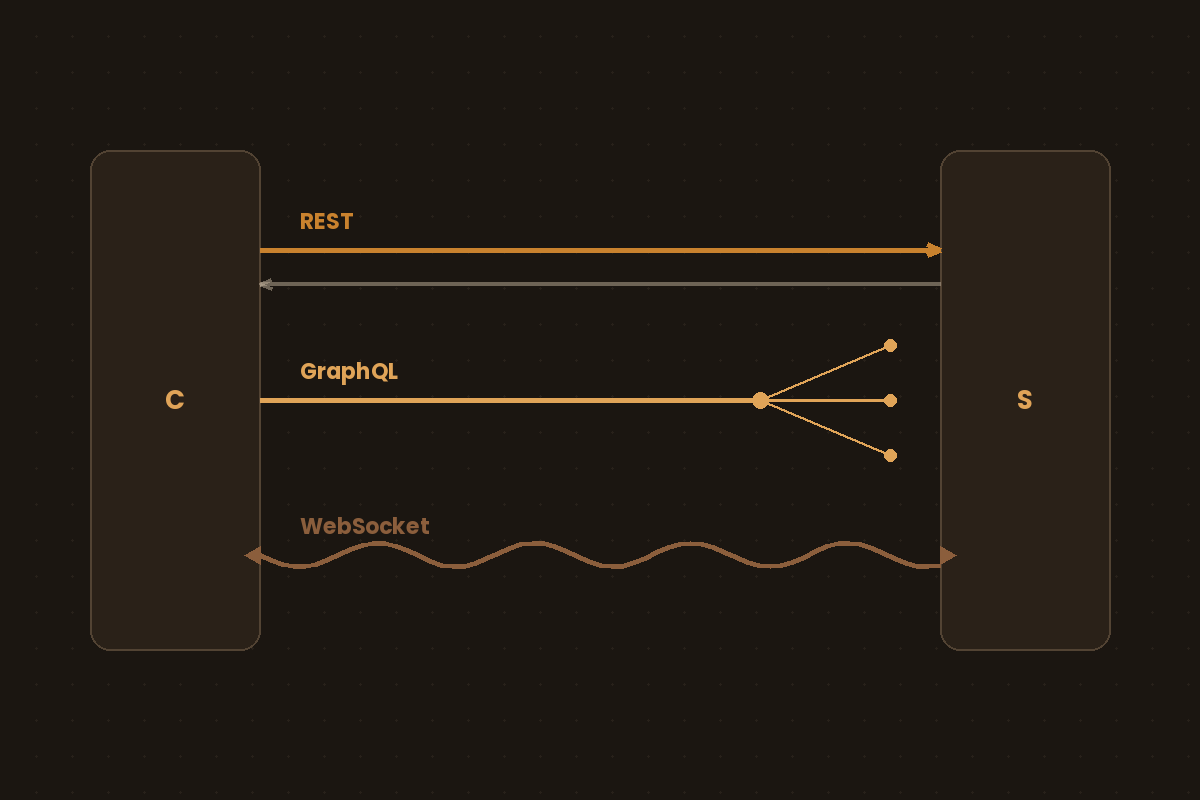
Most Python backends end up choosing between three communication styles: REST, GraphQL, and WebSocket. They solve different problems, and FastAPI happens to support all three cleanly, which makes it a good way to compare them side by side.
REST
The default choice for CRUD-style resources. Simple, cacheable, and easy to reason about.
from fastapi import FastAPI

app = FastAPI()

@app.get("/users/{user_id}")
def get_user(user_id: int):
    return {"id": user_id, "name": "Alexandre"}
GraphQL
A single endpoint where the client specifies exactly what fields it needs, avoiding over- or under-fetching. Here with Strawberry:
import strawberry
from strawberry.fastapi import GraphQLRouter

@strawberry.type
class User:
    id: int
    name: str

@strawberry.type
class Query:
    @strawberry.field
    def user(self, user_id: int) -> User:
        return User(id=user_id, name="Alexandre")

schema = strawberry.Schema(query=Query)
app.include_router(GraphQLRouter(schema), prefix="/graphql")
WebSocket
A persistent, bidirectional connection - the right tool when the server needs to push data without the client asking first.
from fastapi import WebSocket

@app.websocket("/ws")
async def websocket_endpoint(websocket: WebSocket):
    await websocket.accept()
    while True:
        data = await websocket.receive_text()
        await websocket.send_text(f"Echo: {data}")
When to Use Which
- REST - public APIs, CRUD-heavy resources, anything that benefits from HTTP caching.
- GraphQL - nested or variable data shapes, multiple client types (web/mobile) with different needs.
- WebSocket - real-time features like chat, live dashboards, or notifications.
They’re not mutually exclusive - a single FastAPI app can serve a REST API, a GraphQL endpoint, and a WebSocket route at once, and it’s common to mix them depending on the feature.